
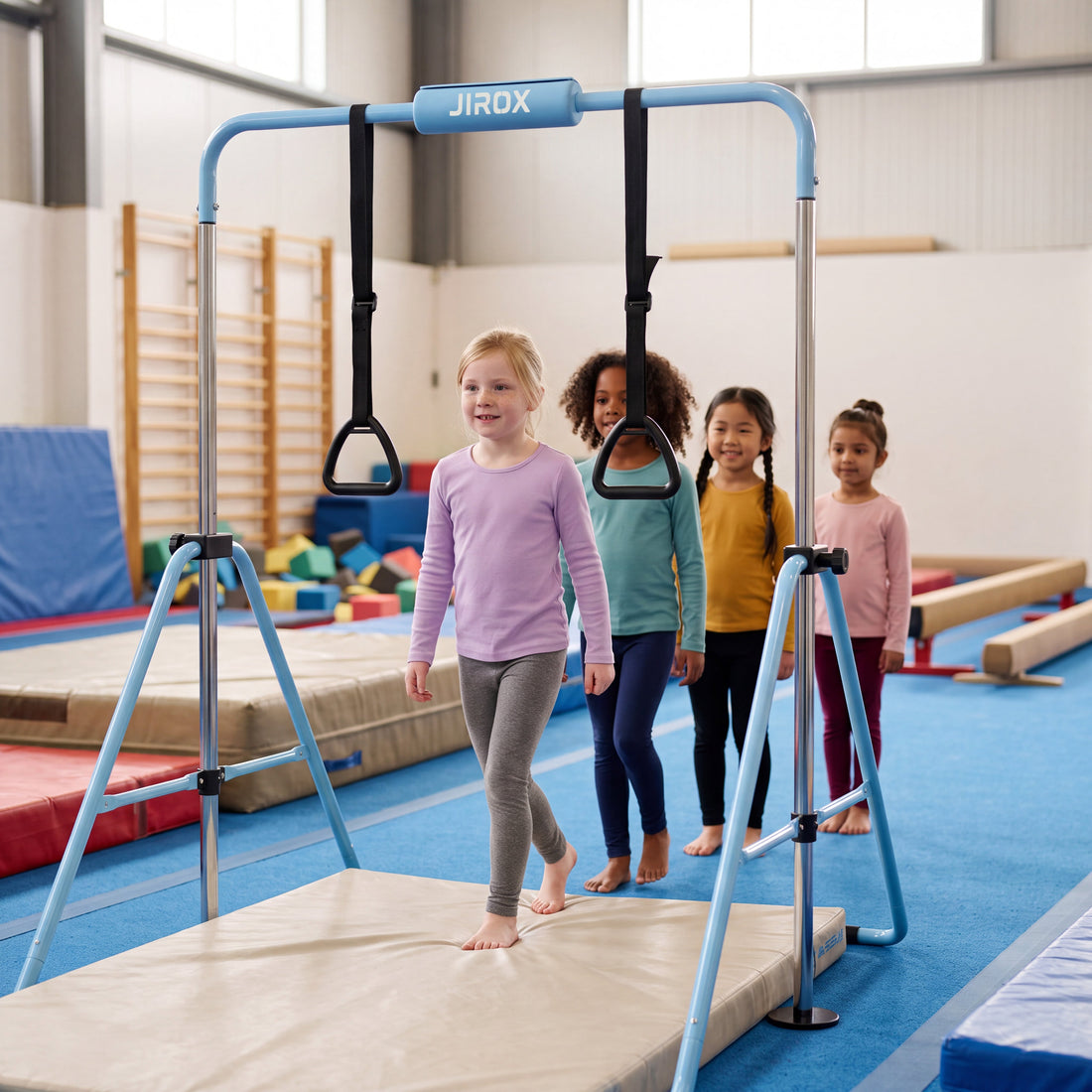
If your child has been begging for a gymnastics bar at home, you're not alone. Whether they're taking classes, watching videos online, or simply love to climb and hang, a gymnastics horizontal bar is one of the most rewarding pieces of equipment you can bring into your home. But with so many options available, knowing where to start can feel overwhelming.
This guide covers everything parents need to know, from what to look for, to how to set one up safely, to which age groups benefit most.
What is a gymnastics horizontal bar?
A gymnastics horizontal bar — sometimes called a kip bar or horizontal kip bar — is a freestanding bar designed for children to practise pull-ups, hangs, swings, and basic gymnastics movements at home. Unlike fixed wall-mounted bars, freestanding versions sit on an A-frame base, making them easy to move, store, and adjust as your child grows.
What age is a gymnastics bar suitable for?
Most gymnastics bars are suitable for children aged 3 to 12, though this varies by product. The key factor is weight capacity. Always check the maximum load rating before purchasing. A bar rated to 50kg will comfortably support most children in that age range, while heavier-duty models rated to 80kg or more can support older children and teenagers.
Height adjustability is equally important. A bar that grows with your child is far better value than one they'll outgrow in a year.
What should I look for when buying a gymnastics bar?
Safety first. Look for non-slip rubber feet on the A-frame base to prevent the bar from sliding on hard floors. The bar itself should have a firm, comfortable grip; foam padding or textured coating makes a big difference during longer sessions.
Adjustable height. Children grow fast. A bar with multiple height settings means you won't need to replace it every couple of years.
Weight capacity. Always buy above your child's current weight. A bar rated to exactly their current weight leaves no safety margin.
Stability. Wider A-frame legs provide a more stable base. Some models include mat anchoring points to prevent movement during use, particularly useful for younger or more energetic children.
Mat included or sold separately. A gymnastics mat is essential. Falls happen, especially while learning. Some bars come bundled with a mat; others don't. Factor this into your budget.
Size when stored. If space is a concern, look for a bar that folds flat or disassembles quickly. Most freestanding bars can be broken down in minutes.
Indoor vs outdoor use
Most gymnastics bars are designed primarily for indoor use, though many can be used outdoors on flat, stable surfaces. If you plan to use it outside regularly, check whether the frame is treated for weather resistance. Prolonged outdoor exposure can cause rust on uncoated steel frames.
Indoors, a hard floor with a mat underneath is ideal. Carpet can interfere with the stability of the A-frame legs, so place the bar on a hard surface where possible.
How much space do I need?
As a rough guide, allow at least 1.5 metres of clearance on either side of the bar and 2 metres of clear space in front and behind. Your child will swing, hang, and occasionally land unexpectedly so give them room to do so safely.
Setting up safely
Assembly is straightforward on most models and typically takes 10 to 20 minutes with the included tools. Once assembled, run through this quick safety check before your child uses the bar for the first time:
- All bolts and screws are fully tightened
- The bar does not wobble or shift when pressure is applied
- Rubber feet are in contact with the floor on all points
- The mat is positioned directly beneath the bar
- The height is set appropriately for your child's age and size
Repeat this check every few weeks, particularly if the bar is used frequently.
What movements can children practise at home?
A gymnastics bar at home is ideal for building foundational upper body strength and coordination. Common movements for beginners include:
- Dead hangs: simply hanging from the bar to build grip strength
- Chin-ups and pull-ups: excellent for building arm and back strength
- Skin the cat: a classic beginner move that develops shoulder mobility
- Cast: a basic swing movement used in competitive gymnastics
- Back hip circle: an introductory bar skill for children with some gymnastics experience
Always supervise younger children and encourage gradual progression. A bar at home should supplement — not replace — structured gymnastics classes if your child is training competitively.
Pink or blue: does it matter?
Purely personal preference. Both colours perform identically. If your child has a preference, involve them in the decision. They'll be far more motivated to use a bar they chose themselves.
The Jirox Gymnastics Bar
The Jirox Gymnastics Horizontal Bar is designed with active families in mind. Available in pink and blue, with or without a matching mat, it features an adjustable height range, non-slip rubber feet, a padded crossbar, and a maximum weight capacity suitable for most children up to age 12.
It assembles in under 15 minutes and folds flat for easy storage, ideal for living rooms, playrooms, or bedrooms where space is shared.
Final thoughts
A gymnastics bar is one of those purchases that genuinely gets used. Unlike many toys that gather dust after a few weeks, a good bar becomes part of the daily routine, especially when it's right there in the living room. The key is buying something safe, adjustable, and built to last. Get that right, and you'll have one very happy, very active child.
