
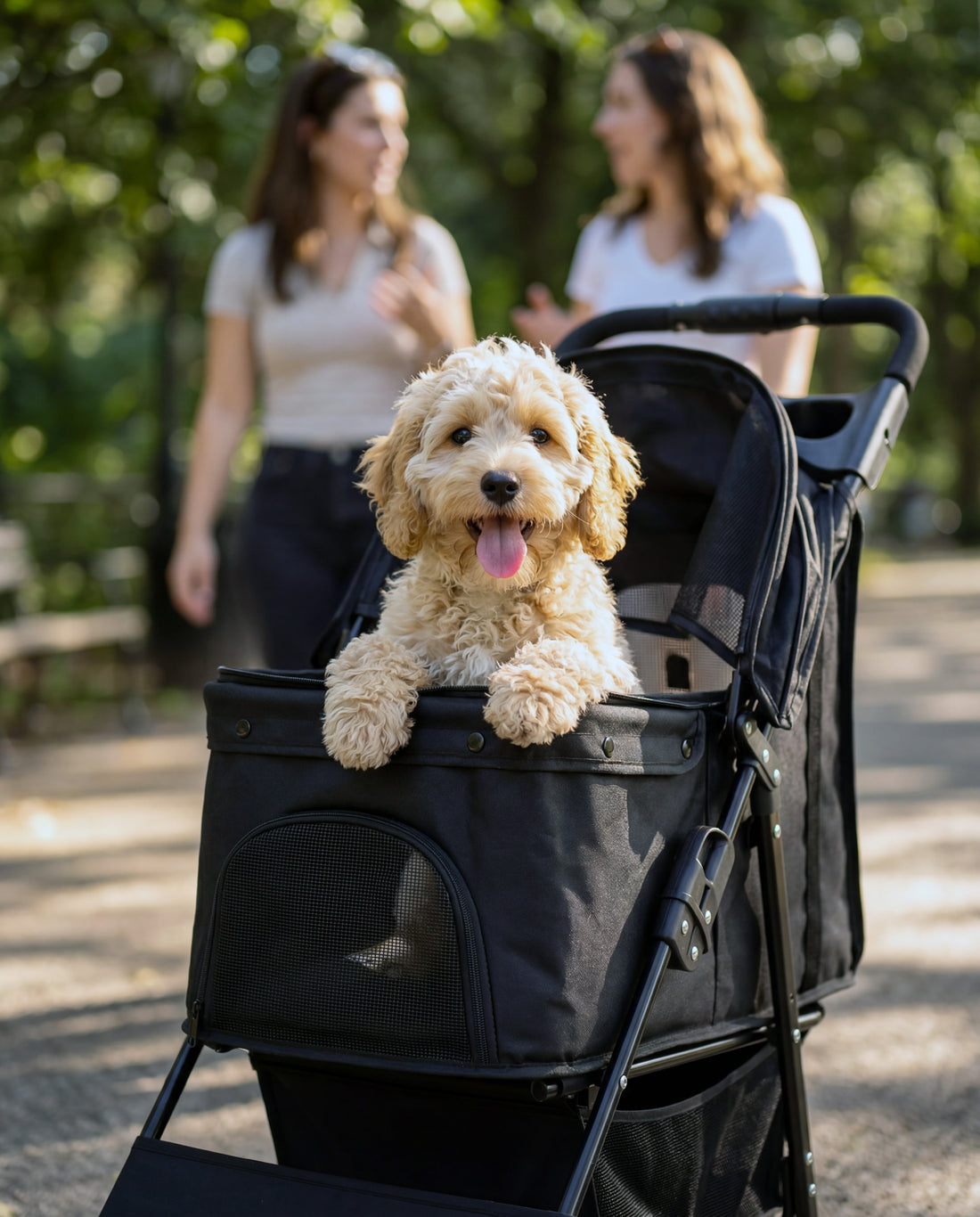
There's a particular kind of guilt that comes with planning a family day out and realising, halfway through, that it's not going to work for the dog. Too much walking for older legs, too much heat for a small breed, too many miles for a pet still recovering from surgery. So they stay home, and the day feels a little less complete because of it.
It doesn't have to be an all-or-nothing choice. With the right setup, dogs who can't manage a full day of walking can still come along for all of it. They just need a comfortable way to ride when their legs need a break.
Here are five family days out where a pet stroller quietly makes all the difference.
1. A long walk through parkland or historic grounds
Big country parks and stately home grounds are made for a full day of wandering, but they're also long. A young dog might handle the distance, but an older dog, a small breed, or a puppy still building stamina will tap out long before the humans do. A stroller means the walk doesn't have to end early for anyone. The dog rides when they're tired and hops out again when they've got the energy back.
2. Market days and busy town centres
Cobbled streets, crowds, and hours of standing around stalls aren't kind to small paws or anxious dogs. A stroller keeps them safe from foot traffic, off hot pavement in summer, and close to the family rather than tangled in a lead through a crowd.
3. The seaside, without the sand struggle
Beach days are brilliant for dogs who love to run, but hard on ones who don't do well with heat, soft sand, or long stretches without shade. Bringing a stroller means you can still get everyone down to the water. The dog just gets a lift across the parts that aren't much fun for them.
4. Visiting family or friends with big gardens
Not every dog wants to be off-lead the second you arrive somewhere new, especially around unfamiliar pets or excitable children. A stroller gives a nervous or older dog a calm, familiar space to sit in while everyone settles, rather than being overwhelmed the moment you're through the door.
5. Recovery walks after surgery or injury
This is the one people don't plan for until they need it. A dog recovering from an operation still needs fresh air and time with the family, but a full walk is out of the question. A stroller means "no long walks yet" doesn't have to mean "left behind." They get the outing, just without the strain.
The point isn't to stop walking your dog
A stroller isn't a replacement for exercise, and it's not for every outing. It's for the days when the distance, the weather, or the dog's own limits would otherwise mean leaving them behind. The families who use one well tend to treat it the same way they'd treat a buggy for a toddler: not a permanent mode of transport, just a tool for the parts of the day that would otherwise be too much.
If there's a dog in your family who's missed out on a few days recently because the walk was too long or the ground too rough, this might be the thing that gets them back in the group photo.

